
Electrostatic Safety & EN 16350
Why ATEX zones need a resistance number — and why “anti-static” is not “insulating” Two gloves can both carry the word “anti-static” on a spec sheet — one dissipates...


Why ATEX zones need a resistance number — and why “anti-static” is not “insulating” Two gloves can both carry the word “anti-static” on a spec sheet — one dissipates...
The Dorsal Impact Standard — Reading Level 1, 2, and 3 Correctly A “P” on an EN 388 shield and a “LEVEL 2” pictogram both claim impact protection. They...
Permeation, penetration, and degradation — the three words buyers conflate A chemical glove’s biggest failure mode usually isn’t a hole. It’s a buyer who reads “Type A” as “stronger”...
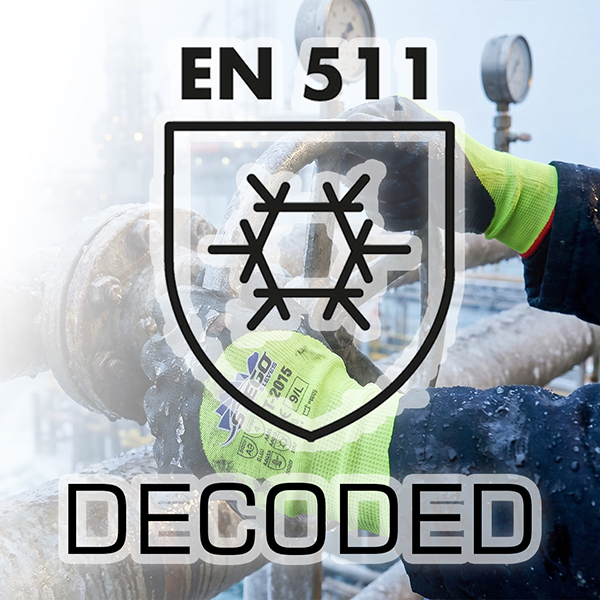
Reading cold protection — convective, contact, and water, and what each one actually commits to A cold-rated glove carries three separate scores, not one “warmth level.” Two of them...
Reading the six-position heat-and-flame code, and why five X’s can still be a pass A glove stamped with the EN 407 flame-and-shield pictogram is not automatically “heat resistant.” It’s...
Why A1–A9 and A–F don’t convert 1:1 — and how to read a dual-marked glove A glove can carry an ANSI/ISEA 105 cut score of A6 and an EN...
Reading the six-character shield, position by position A glove marking is not one number. It’s six independent test results, and misreading any one of them is how EHS teams...